
Food Projects
Our Food
Our Library
Native plants, trees, shrubs, flowers, and some edible fruiting plants that thrive in the Sacramento–Elk Grove region
Native plants, trees, shrubs, flowers, and some edible fruiting plants that thrive in the Sacramento–Elk Grove region (Mediterranean climate with hot, dry summers and cool, wet winters). These species are drought-tolerant, support wildlife/pollinators, and are suitable for sustainable gardens in your area.
Native Trees (Great Shade, Habitat & Long-Term Growth)
- Valley Oak (Quercus lobata) – iconic, supports birds & wildlife.
- Blue Oak (Quercus douglasii) – excellent drought-adapted.
- Interior Live Oak (Quercus wislizeni) – evergreen oak for hot summers.
- California Black Walnut (Juglans hindsii) – classic valley tree.
- Western Redbud (Cercis occidentalis) – stunning pink spring blossoms.
- California Buckeye (Aesculus californica) – attractive, spring flowers.
Native Shrubs & Bushes (Structure, Birds & Pollinators)
- Coffeeberry (Frangula californica) – evergreen with berries; bird-friendly.
- Manzanita (Arctostaphylos spp.) – evergreen, sculptural, low water once established.
- California Lilac (Ceanothus spp.) – blue flowers that attract bees.
- Toyon (Heteromeles arbutifolia) – winter red berries attract birds.
- Blue Elderberry (Sambucus mexicana) – berries used by wildlife and people.
- Serviceberry (Amelanchier utahensis) – multi-season interest & edible berries.
Native Flowering Perennials (Blooms & Pollinators)
- California Poppy (Eschscholzia californica) – the state flower; drought-tolerant.
- Verbena (Verbena lilacina ‘De La Mina’) – purple flowers all season.
- Purple Coneflower (Echinacea purpurea) – pollinator magnet.
- Oregon Grape (Mahonia aquifolium) – evergreen shrub with yellow blooms & berries.
- Wild Rose (Rosa californica) – beautiful blooms + hips for birds; thrives in moist spots.
- Native Sage & Salvia spp. – fragrant, pollinator-friendly; good in borders.
Native Grasses & Groundcovers (Low Water & Soil Health)
- Deergrass (Muhlenbergia rigens) – tall ornamental grass.
- Purple Needlegrass (Stipa pulchra) – California state native grass.
- California Buckwheat (Eriogonum fasciculatum) – good nectar for bees.
- Yarrow & Coyote Mint – excellent for pollinators and low water.
- Western Sword Fern (shade areas) – hardy understory plant.
Edible & Wildlife-Friendly Native Fruit/Berry Plants
While true fruit trees like peaches or apples are not native, several native plants produce edible fruit or attract beneficial wildlife:
- Blue Elderberry – berries edible when cooked (also great for birds).
- Serviceberry – sweet edibles good for wildlife and people.
- Toyon – berries used in jams and attract birds.
- Wild Strawberry – small edible groundcover (good in gardens).
- Native Milkweeds & Butterfly Plants – not food for humans but essential for monarchs and pollinators.
Tips for Success in the Sacramento Area
- Most natives thrive in full sun to partial sun and well-drained soil. Water deeply but less frequently once established.
- Group plants by water needs: drought-tolerant together, moisture lovers near irrigation or rain catchment areas.
- Use native groundcovers and grasses to reduce weeds and water use.
- Native shrubs and oaks create habitat for birds, bees, butterflies, and beneficial insects.
Low-water native planting plan
Low-water native planting plan that supports food, pollinators, shade, and resilience.
Climate:
- Mediterranean (wet winters, dry summers)
- USDA Zone 9b
- Clay-heavy soils common
Below are 3 scalable layouts.
🌱 500 sq ft Native Garden (Small Yard / Side Yard)
Goal:
Pollinator support + small edible natives + low water
🌳 Structure (1 small tree)
- Western Redbud (spring flowers, partial shade)
🌿 Shrubs (3–5)
- Coffeeberry
- California Wild Rose
- Manzanita
🌼 Flowers
- California Poppy
- Yarrow
- Hummingbird Sage
🌾 Ground Layer
- Purple Needlegrass
Water:
- First year regular deep watering
- After establishment → minimal summer irrigation
Good for urban lot or tiny home garden.
🌳 1,000 sq ft Sustainable Garden
Goal:
Small food forest feel + habitat + privacy
🌳 Canopy (1–2 trees)
- Valley Oak (if space allows)
- Western Redbud
🌿 Shrub Layer
- Blue Elderberry
- Toyon
- Coffeeberry
🌼 Pollinator Strip
- California Fuchsia
- Cleveland Sage
- Penstemon
🌾 Grasses
- Deergrass
Optional: Add raised beds for vegetables (tomatoes, squash, beans) — these are not native but thrive here.
This size supports:
- Bird habitat
- Some edible berries
- Shade cooling for tiny home
🌿 3,000 sq ft Resilient Micro-Farm
Now we’re building something aligned with your self-sufficient vision.
🌳 Overstory (2–4 trees)
- Valley Oak
- California Sycamore
- California Black Walnut
🌳 Understory Food Trees (add non-native but climate-adapted)
- Fig
- Pomegranate
- Persimmon
- Olive
🌿 Shrub Guilds
- Blue Elderberry
- Manzanita
- California Wild Rose
🌾 Meadow / Ground
- Purple Needlegrass
- Native wildflower mix
🥕 Food Beds (600–800 sq ft)
- Seasonal vegetables
- Herbs
- Compost area
- Drip irrigation
This size can:
- Supplement 1–2 people significantly
- Reduce water use
- Provide cooling shade
- Build soil health
💧 Water Strategy for Sacramento
- Drip irrigation only
- Heavy mulch (3–4 inches)
- Plant in fall (October–November best)
- Deep water infrequently
After 2–3 years many natives need little summer water.
🌞 Best Design Layout Rule
Front yard → pollinator & native beauty
Side yard → edible shrubs
Back yard → food beds + shade trees
North/West side → tall trees for summer cooling
FRUIT TREES (Very Well Adapted to Sacramento Heat)
🌳 FRUIT TREES (Very Well Adapted to Sacramento Heat)
Mediterranean / Middle Eastern
- 🍈 Fig
- 🍎 Pomegranate
- 🫒 Olive
- 🍑 Apricot
- 🍑 Peach
- 🍐 Pear (low chill varieties)
Asian
- 🍊 Satsuma Mandarin
- 🍋 Yuzu
- 🍈 Asian Pear
- 🥭 Fuyu Persimmon
- 🫐 Mulberry (Chinese varieties do great)
Latin American
- 🍈 Guava (pineapple guava does very well)
- 🍌 Hardy banana (needs protection but possible)
- 🌵 Prickly pear cactus
Subtropical (with some protection)
- 🥭 Mango (microclimate only)
- 🥑 Avocado (Mexican cold-hardy varieties)
- 🍊 Kumquat
🍓 BERRIES THAT LOVE SACRAMENTO
- Blueberries (with acidic soil prep)
- Blackberries
- Raspberries (partial shade)
- Strawberries
- Goji berries
- Grapes (excellent here)
🥬 SUMMER VEGETABLES (Thrive in Heat)
Sacramento heat is PERFECT for:
- Tomatoes
- Peppers (all types)
- Eggplant
- Okra
- Armenian cucumbers
- Zucchini
- Melons (watermelon, cantaloupe)
- Sweet potatoes
- Yardlong beans
- Malabar spinach
- Bitter melon
🥦 WINTER VEGETABLES (Grow During Mild Winters)
- Kale
- Broccoli
- Cauliflower
- Cabbage
- Brussels sprouts
- Spinach
- Garlic
- Onions
- Carrots
- Beets
- Fava beans
- Snow peas
Sacramento winters are mild enough for year-round production.
🌿 HERBS FROM AROUND THE WORLD (Low Water Once Established)
Mediterranean:
- Rosemary
- Thyme
- Oregano
- Sage
- Lavender
Asian:
- Thai basil
- Lemongrass
- Shiso
Latin:
- Cilantro (cool season)
- Epazote
Middle Eastern:
- Za’atar (wild thyme types)
🌴 HIGH-YIELD GLOBAL CROPS THAT DO AMAZING HERE
These are powerhouse crops for a 3,000 sq ft lot:
- Fig (huge yields)
- Pomegranate (low water, high nutrition)
- Grapes (very productive)
- Tomatoes (can be overwhelming yield)
- Zucchini (almost too productive)
- Persimmon (minimal maintenance)
🌞 WHY SACRAMENTO IS SO GOOD FOR GLOBAL CROPS
- Long growing season (March–November)
- Intense summer heat (great for fruiting crops)
- Minimal humidity (less fungal disease)
- Mild winters (cool-season veggies thrive)
Main limitation:
Water management + clay soil.
🥕 Realistic 3,000 sq ft Production Potential (Mixed Global Garden)
With good planning:
- 1,500–3,000 lbs vegetables annually
- 400–1,000 lbs fruit annually (after trees mature)
- Year-round harvest cycles
- 50–70% vegetable self-sufficiency for 2 people
3,000 sq ft Global Food Forest Design
🌳 3,000 sq ft Global Food Forest Design
Mediterranean Climate | Water-Wise | High Yield
📐 Layout Concept (Rectangular Lot Example)
Assume ~30 ft × 100 ft (3,000 sq ft)
Zoning:
- West side → Tall canopy (heat shield)
- Center → Fruit guild clusters
- South/East → Intensive vegetables
- North edge → Berries & partial shade crops
- Corners → Compost + water catchment
🌲 1️⃣ Upper Canopy (3–4 Trees Total)
Plant on WEST/SOUTHWEST for shade cooling.
- Fig (high producer)
- Olive (low water)
- Pomegranate (heat tolerant)
- Persimmon (Fuyu type)
Optional (microclimate):
- Avocado (Mexican cold-hardy)
These reduce heat load and build long-term structure.
🌳 2️⃣ Understory Fruit Trees (Between Canopy)
- Asian pear
- Peach or nectarine
- Mulberry
- Citrus (Satsuma, lemon, kumquat)
Space 10–15 ft apart.
🌿 3️⃣ Shrub Layer (Food + Habitat)
Around tree drip lines:
- Blueberry (acid soil pocket)
- Goji berry
- Raspberry (north side shade)
- Pineapple guava
- Elderberry
🌱 4️⃣ Herb Layer (Drought Tolerant)
Under trees + borders:
Mediterranean:
- Rosemary
- Thyme
- Oregano
- Sage
- Lavender
Asian:
- Lemongrass
- Thai basil (summer)
- Shiso
These reduce pests naturally.
🥬 5️⃣ Vegetable Production Zone (800–1,000 sq ft)
Use drip irrigation.
Spring/Summer:
- Tomatoes
- Peppers
- Eggplant
- Okra
- Melons
- Sweet potatoes
- Yardlong beans
Fall/Winter:
- Kale
- Broccoli
- Garlic
- Carrots
- Fava beans
- Spinach
Rotate every season.
🍓 6️⃣ Groundcover Layer
Under trees:
- Strawberries
- Clover (nitrogen fixing)
- Sweet potato (summer cover)
- Nasturtium (edible + pest control)
🌾 7️⃣ Vertical Layer
Maximize space:
- Grapes on fence
- Passionfruit vine
- Pole beans
- Trellised cucumbers
💧 Water System (Critical in Sacramento)
- Drip irrigation only
- 3–4 inches wood mulch everywhere
- Swales or shallow basins around trees
- Rain barrels
- Plant heavy in fall (October best)
After 2–3 years:
Trees need minimal summer water.
🌡 Heat Resilience Strategy
Sacramento can hit 105–115°F.
To survive heat waves:
- Afternoon shade trees
- Mulch deeply
- Windbreak (hedge line)
- Avoid planting tender crops in west exposure
🧺 Estimated Annual Yield After Year 4–5
Vegetables:
1,500–3,000 lbs
Fruit:
500–1,200 lbs
Herbs:
Continuous supply
Potential:
50–70% produce self-sufficiency for 2 adults
🌍 Philosophical Design Layer (Optional)
You could organize in symbolic rings:
Center:
Small meditation bench
Inner circle:
Fruit trees
Outer circle:
Vegetables
Border:
Pollinator meadow
This becomes a living expression of ecological interdependence.
💰 Rough Startup Budget (DIY)
Trees (10–15 total): $500–1,200
Drip irrigation: $300–600
Soil amendments & mulch: $400–800
Beds & trellis: $300–700
Total DIY: $1,500–3,500
3,000 sq ft Global Food Forest + Greenhouse System
🌍 3,000 sq ft Global Food Forest + Greenhouse System
Zone 9b | Heat-Resilient | High Yield | Water Smart
📐 Land Allocation (3,000 sq ft)
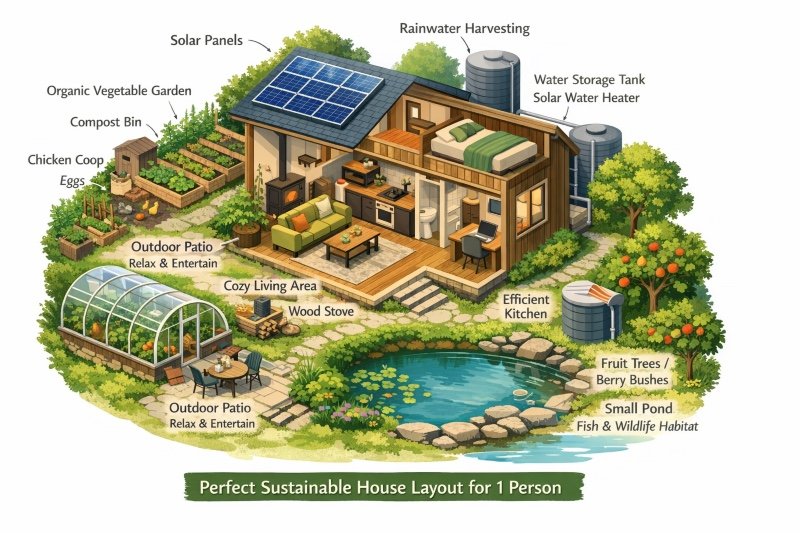
- 800 sq ft → Greenhouse + nursery zone
- 900 sq ft → Orchard canopy
- 800 sq ft → Outdoor vegetable beds
- 300 sq ft → Berries & understory
- 200 sq ft → Compost, water storage, tool shed
🌿 GREENHOUSE DESIGN (Critical Upgrade)
Ideal Size:
20 ft × 40 ft (800 sq ft)
OR
16 ft × 30 ft (480 sq ft if space tighter)
Orientation:
Face SOUTH
Long side East–West
Ventilation on both ends
🌡 What the Greenhouse Allows You to Grow
🍅 Extended Season Vegetables
- Tomatoes (start February)
- Peppers (earlier harvest)
- Eggplant year-round
- Cucumbers winter production
- Lettuce during summer heat (shade cloth)
🥭 Subtropical / Rare Crops (Sacramento Possible With Protection)
- Mango (container grown)
- Dragon fruit
- Papaya (protected winter)
- Ginger
- Turmeric
- Passionfruit
- Lemongrass year-round
- Thai basil in winter
🌱 Seedling Production
Start all transplants early:
- Brassicas in late summer
- Tomatoes in late winter
- Perpetual herb propagation
This dramatically increases output.
🌳 OUTDOOR ORCHARD ZONE (West Side Heat Shield)
Canopy:
- Fig
- Olive
- Pomegranate
- Persimmon
Understory:
- Asian pear
- Peach
- Citrus
Shrubs:
- Blueberry
- Goji
- Elderberry
🥕 OUTDOOR VEGETABLE ZONE (800 sq ft)
Heavy summer producers:
- Tomatoes
- Okra
- Melons
- Sweet potatoes
- Beans
- Zucchini
Winter crops:
- Garlic
- Kale
- Broccoli
- Fava beans
- Carrots
🍇 Vertical Systems
Fence:
- Grapes
- Passionfruit
Trellis:
- Pole beans
- Armenian cucumbers
💧 Water System Strategy
Greenhouse:
- Drip lines
- Mulch heavily
- Shade cloth June–September
Outdoor:
- Deep mulch (3–4 inches)
- Swales for tree irrigation
- Rain barrel storage
🔥 Heat Management (Sacramento 110°F Days)
For greenhouse:
- Auto roof vents
- Exhaust fan
- Shade cloth (40–50%)
- Whitewash poly in summer
- Thermal mass (water barrels)
Without ventilation → greenhouse will overheat fast.
🧺 Production Potential (After Year 4–5)
Vegetables:
2,000–4,000 lbs annually
Fruit:
600–1,200 lbs annually
Herbs:
Continuous supply
You could realistically hit:
60–80% produce self-sufficiency for 2 adults.
💰 Approximate Cost
Greenhouse kit (mid quality): $1,200–3,500
DIY poly tunnel: $800–1,500
Ventilation system: $300–700
Drip irrigation: $300–600
Trees + plants: $1,000–2,000
Total full build:
$3,500–8,000 depending on quality.
🌿 Long-Term Vision
With greenhouse included, this becomes:
• Climate-resilient
• Drought-buffered
• Near year-round harvest
• Scalable to community model
• A prototype for regenerative micro-living
